

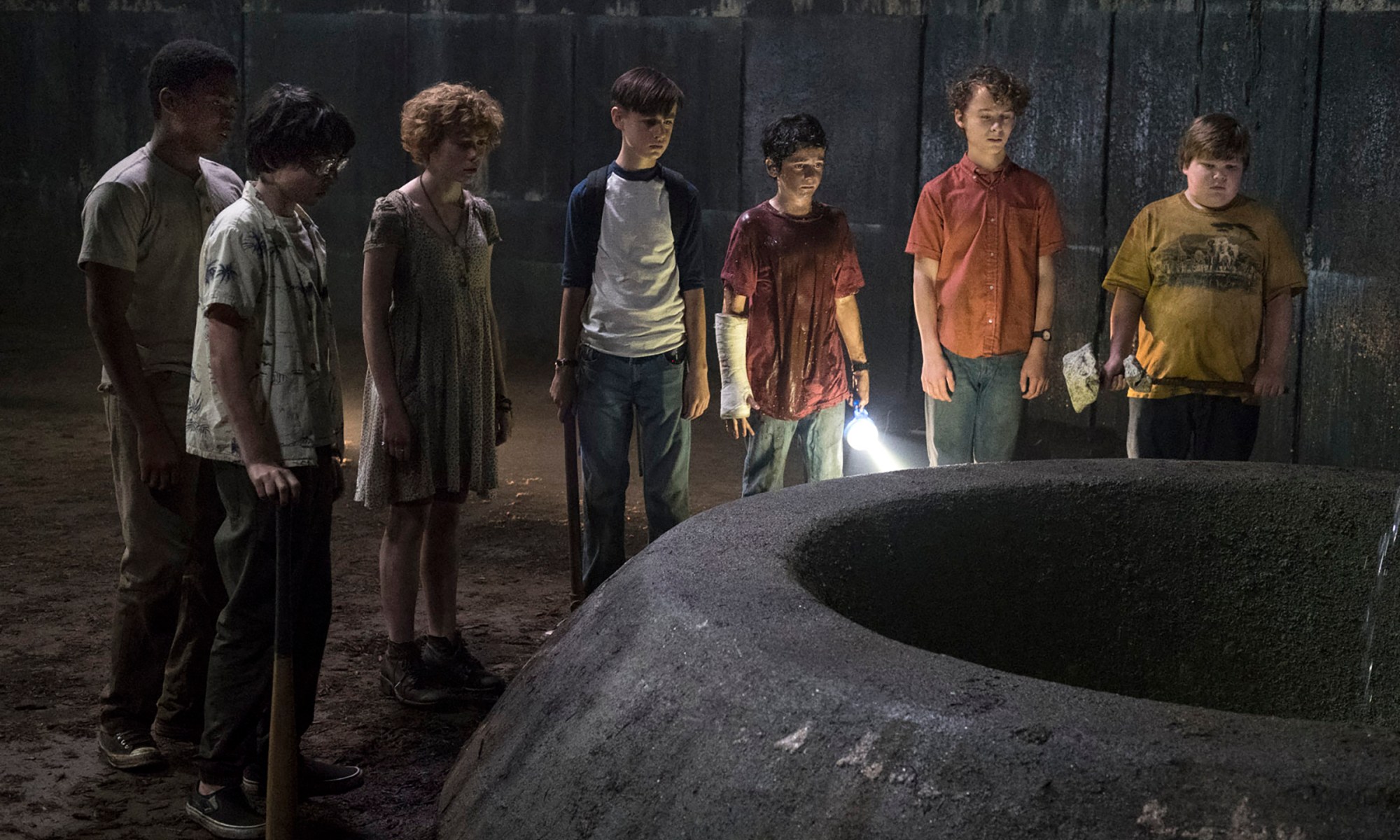
I’ve long been a Stephen King fan, and IT was my first exposure to his writing. I found the immense paperback in a desk drawer one afternoon in Frankfurt, Germany when I was pulling guard duty at an Army Airfield. I remember being impressed with the character development early in the book, and how easily, and quickly, King could create a relatable character who seemed authentic. I thought the dialogue could be a little cringe-worthy, but overall I recall getting into the story pretty quickly and cruising along until it got creepy.
When I was younger man, I was much more credulous and had poorly developed critical thinking skills. As a result, I was susceptible to a good scare from all manner of supernatural tales. Vampires, ghosts, demonic possession… that kind of thing. For example, I was terrorized by The Exorcist after seeing it with some friends when I was in high school. Today, as a jaded, pessimistic adult whose eyes have been opened, the fact that exorcist is an actual job title is pretty comical. Anyway, my point is that IT gave me a good case of the creeps at some point in the telling and I guess I never returned to it, because when it was just released as a movie, I found that I couldn’t remember how the book ended.
Determined to find out, I got myself a copy and dove in. Even though my first reading was in 1987, I immediately remembered the characters and their back story, so I know it’s not that I forgot the second half of the book; I just never actually read it.
Having read almost everything King has ever written, I am accustomed to his expansive brand of storytelling, and honestly, some of his best writing in my view, is when he’s doing back story or what some might call filler content. I don’t care much for his dialogue as I find it doesn’t ring true. People just don’t speak that way. I think I loved the Dark Tower so much because Mid-World’s dialect was supposed to be different, so it rarely caused the reaction I got when Eddie Dean and Susannah would utter lines that made me think my eyes might stay permanently rolled back in my head. IT features lots of that kind of clunky chit chat spoken by children no less, making it even more difficult to read.
People who haven’t read IT tend to associate the story with Pennywise the Clown, but once you get into it you come to realize the clown has very little to do with the tale. In fact, the idea of a killer clown is pretty terrifying, mostly because it can easily be true. IT however, is neither a clown, nor anything even remotely close to something that exists in the world we know and live in. As a result, IT quickly breaks down into a monster under the bed story (in this case, under the town of Derry) with a group of unbelievably brave kids willing to take it on.
Some of the more creative elements of the story center around the kids as adults who’ve forgotten the battle against the alien monster of their youth, suddenly called back to face IT again, as IT awakens from its roughly 27-year cycle of hibernation to again feast on Derry, Maine. One of the kids stayed in Derry you see, and thus, his memory was unaffected. He kept the watchful eye on the town in case the beast wasn’t killed when the kids made their original stand in the sewers of Derry.
Nothing about IT is actually frightening, but there are some disturbing elements in the book, which are all too human in nature. Violence, racism, sexism, misogyny, and murder are all featured at length in the supersized novel, and if anything in IT sticks around in your mind after you’ve read it, it’s those earthly, rather mundane atrocities rather than anything related to the monster that occasionally takes the shape of a Ronald McDonald styled clown.
There were a few points in the book where I almost gave up, but I persevered and finally found out what happens in the end. In the immediacy of completion, I’m left with a handful of images from the story, mostly about how awful people can be to each other, as kids or adults, and the sadness that comes from being forgotten.
 Joe's Blog