

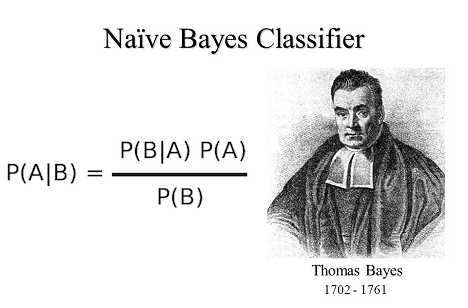
A few years ago, impressed as I was–and still am–with Menno Henselmans, I completed a questionnaire for the purpose of hiring Menno to take over my training and nutrition. I had a pretty good inkling I couldn’t afford his services, and mentioned as much in my email to him, and when I received his quote my instincts were proven on point.
Since then, I’ve made every effort to obtain as much information as I could from every online source available at little to no expense. My cumulative knowledge has expanded significantly but I still felt as if I were winging it somewhat, without the comprehensive understanding I wanted. After much deliberation, I signed up for the Bayesian Bodybuilding Personal Training course. I figure if I can’t afford to pay Menno to coach me, I can afford to pay him to teach me to coach myself.
I’m 3 weeks into what is a 7-month course, so there’s much knowledge ahead waiting to be absorbed. I’m impressed with the opening volley and have made some adjustments to my nutrition as a result. The biggest is trying to remove any inflammatory foods from my diet and increasing the anti-inflammatory foods. I’ve also cut way back on my caffeine consumption so that I can actually benefit from the caffeine I take pre-workout. I’m drinking a cup of decaf as I write this!
The most important take away thus far though is not anything specific to training, but to thinking. How to think properly is something one can always improve on, and Menno’s course has helped me install a few new apps to my necktop as Daniel Dennett would put it. A few examples to illustrate:
- Rationality comes from having consistent beliefs.
- Proof is the highest standard possible and is reserved for things that can be proven mathematically. The best we’re going to get in fitness and nutrition is probability.
- Energy cannot be destroyed. For fat loss to occur, we must create a deficit in the energy required to function vs. the energy intake from food. Our bodies make energy from everything we eat, so precise distribution of macro nutrients takes a back seat to overall energy balance. Fat loss can be defined as easily as “creating an energy deficit.”
- For something to contribute to fat loss, whether an activity, a supplement, a food or what have you, it must do one of three things:
1. Increase energy expenditure
2. Decrease energy intake
3. Improve nutrient partioning
If the fat loss method proposed can’t show with a reasonable degree of probability to accomplish one of those things, it should be considered ineffective.
When it comes to training itself, I’m going to have to wait a while to get Menno’s Bayesian approach to designing and optimizing training for muscular hypertrophy, but what I’ve pieced together thus far from interviews, podcasts and articles by Helms, Schoenfeld, Nukols and even Israetel is that volume is the primary driver of continued hypertrophy. Larger muscles are a byproduct of improved endurance at the cellular level combined with increased strength. Frequency is just a way to divide up the volume to make the plan work for the individual. More often isn’t necessarily better, but it can allow one to do more overall work. I personally have tried 5x per week frequency, basically full body workouts 5 days a week, 2x per week frequency and am currently trying 3x per week. Some pros and cons:
5x week pros:
- Short workouts. The volume for each lift is only 2 sets.
- Better quality sets. Fatigue just doesn’t become a factor with the volume this low.
- Not sure how to describe what essentially feels like a more athletic approach to training. It just feels good to work the whole body. It feels more “natural” than chopping it up into bits, like training just shoulders and arms.
5x week cons:
- Connective tissue issues. I definitely notice an increase in the creakiness I feel at the joints with higher frequency lifting. My elbows in particular are unhappy these days.
- Time commitment. Even though my lifestyle currently allows me more flexibility than most, it’s still pretty tough to get to the gym 5 days every week.
2x week pros:
- The training can be completed in 4 days, freeing up a day for recovery or just not dealing with traffic.
2x week cons:
- I have to do more volume per workout with a twice weekly frequency. Perhaps due to my age, my recovery ability, tolerance for volume, or a combo platter of them all, I get fatigued and a little bored during the workout, and more sore than I’d like afterwards.
3x week pros:
- Per session volume seems to be in the Goldilocks Zone so far.
- Reasonable workout length.
- Could theorectically condense training week to only 3 days.
3x week cons:
- None yet.
Exercise selection is the most enjoyable aspect of training for me these days, after years of powerlifting training where the choices for effective lifts are pretty minimal. That doesn’t mean all lifts are created equally. Menno has an excellent objective criteria for choosing movements which I stick to most of the time. The biggest change for me was eliminating the deadlift, doing touch and go bench press again and spending time actually working calves and biceps.
My “bulk” continues, and I’ve tweaked it based on the energy intake module in the course. I’ve put on some body fat since I started increasing calories back in November, but I’m still somewhere between 11% and 12.95% at the moment, so I’m driving on. I will use my newfound techniques to try to run as lean a bulk as possible until it’s time to drop some of the fat. Menno has provided lots of data showing that just adding more calories won’t add more muscle, but it will definitely add more fat.
I felt like writing a bit, and now that’s done.
 Joe's Blog