

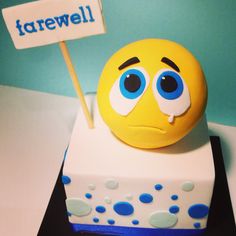
To paraphrase Kit Harington, in one of the many interviews he must have grown weary of doing, as he was asked the same question countless times, he said the end of Game of Thrones was like coming to the end of a good book; you’re not exactly “happy” it’s over. You’re hopefully satisfied, but happy may not be a possibility. I have to agree with him.
I’ve watched the final show twice; once in real time at its accustomed 9:00 PM slot on Sunday night, and once this morning. I’ve watched a couple of YouTube folks give their opinion, and I’ve discussed it with my partner-in-crime and I’ve come away exactly as Kit described. I’m not happy, but I’m satisfied. I’ve watched the entire series twice. I’ve gotten wrapped up enough in it to start reading the books. Clearly, I’m a fan, and while I can find plenty to be critical about if I were to choose that path, I can’t bring myself to do it. The tale was such an epic undertaking, and so groundbreaking in presentation, that to nitpick its missteps seems curmudgeonly.
I’m one of the fortunate ones to have never read the books before being drawn into the show, so I was able to be continually shocked as seemingly main characters were killed off amid the almost gratuitous violence. I got to gasp and shield my eyes, to yell out from my couch in a darkened room as I watched, and to anxiously await the next episode with the comforting knowledge that there were many seasons ahead of me. Somehow time erases that comfort and forces things to come to an end, and Thrones ended in a series of feature length episodes that rival films in their scope, production and cinematography.
As I contemplate the paths the survivors set off on in the closing moments, I can’t think of any other way they could have gone. Jon Snow was a natural leader, but not because he wanted to be. There was something about his personality and his character that many felt drawn to. Could he have been a wise, even handed ruler of a nation or a kingdom? Almost certainly. But it just wasn’t in his nature. Way back in Season 1 when we met the young secret Targaryen, he was volunteering to take the black and be a man of the Night’s Watch, even as his uncle told him it meant no lands, no wife, no children. When he was named Lord Commander of the Watch, he didn’t want it, made very unpopular decisions and died for them. He didn’t want to be named King in the North and promptly left to recruit help for his primary mission of preparing to face the army of the dead, putting Sansa in charge at Winterfell. When he returned without his title, he didn’t even find it important enough to explain to his fellow northmen and women. When called Warden of the North by his new Queen, and asked his thoughts on what to do about Jamie Lannister, he dismissed it quickly for the more important issue of the moment; that they needed all the fighters they could get. No manner of persuasive argument by Tyrion, Varys, Arya or anyone else was going to change his nature and have him stake a claim for the Iron Throne. Many men died at the hands of Jon Snow over the years, but only in the end did he become a murderer, and his struggle with whether it was justified or not will follow him into exile in the true north with Ghost.
Danyerus was the truly tragic tale in Westeros, orphaned and exiled, sold as chattel by her brother, her fortunes appeared to change when Khal Drogo fell in love with her and she rose to prominence among a strange people. But tragedy followed her there, with only the discovery of her special power and the return of dragons to the world a sign of a possible better future. It became an almost fatal effort, but she dragged her gaggle of followers onward to small successes that built her delusional worldview that she might just be something truly special. Success brought confidence, and her power grew as her vision for a new world grew exponentially. She began to see herself not just as the rightful heir to the Iron Throne, but as someone who could reshape the world. I never bought the thread that became one of the main criticisms of the show’s final season; that the writers rushed into a Mad Queen characterization of Dany. She never seemed insane to me; just a bolder and more delusional version of herself as her armies grew and she could almost taste the coming victory at King’s Landing. Certainly the betrayal she felt after sacrificing so much to help the north fight off the Night King, the death of two of her dragons, the beheading of her friend and confidante at the hands of Cersei, the revelation that Jon Snow was her nephew with a stronger claim to the throne than she herself had, all fueled her anger. But Dany was no stranger to bringing death and destruction to many, and without remorse or any semblance of empathy. Torching King’s Landing was an act of genocidal level cruelty, but not insanity, unless she’s been insane all along. We’ll see what the books reveal as perhaps I’m wrong, and George R.R. Martin’s vision for Dany was a trip over the abyss into mental illness. If so, I will stand corrected and give credit to those critics who saw it in the show and felt it was rushed and forced. I saw nothing more than a powerful figure, corrupted by that power, as has happened since the beginning of recorded history. That she died at the hands of her last hope for love and companionship after reaching what she had so long sought is the ultimate tragedy of her life.
Sansa had her little girl fantasy vision of life shattered in the most brutal way, starting with the execution of her father at the hands of her young love Joffrey, and then through a succession of mental and physical abuse by men until she fought her way back to Winterfell. There she grew into the intelligent, strong leader that ultimately led to her power play for an independent North, who then named her Queen.
Arya was a rambunctious child who wanted to be a knight. She had no desire to be a lady, to be a high-born honorable woman who would marry young and breed children. She was also thrust into horror as Sansa was, and her life took turns no one could have envisioned for her. Driven by revenge, she became a hardened assassin, but her Stark nature couldn’t allow her to descend into the life of a paid killer. She wanted to bring justice to those who had wronged her family, who had torn them apart and cause so much death and chaos, but she was no hired gun. Her massacre of House Frey and execution of Littlefinger stood out as epic, but I never could have imagined she would ultimately save all of humanity. For days after the Battle for Winterfell, I walked around saying “Arya saved all of humanity.” It was a remarkable moment of story-telling in what was one of the most intense and visually stunning episodes of the entire 8 seasons. That she would leave as she did was Arya to the core.
Bran was a tragic figure as well, being crippled as a child and becoming a burden to his family and friends. His young life took the oddest path of all and while apparently critically important, it never grabbed my attention like the others. Being voted in as King of the now 6 kingdoms by the important lords and ladies of the realm didn’t seem to phase him, but then again, nothing does. He will likely be the least charismatic king in Westerosi history, which after what they’ve been through, is a change I’m sure they’ll embrace. For a while at least.
I thought Brienne taking on the task of highlighting Jamie’s many accomplishments was a touching moment, and cemented her as one of the truly good and honorable people in the realm. Tormund knew it too, but she broke his Wildling heart.
Sam Tarly was one of the show’s most consistent characters and a crucially important one who was never confident enough of his contributions to the effort. His seat on the small council is well earned, and I thought for a brief moment–I’m pretty sure I said it aloud–that Sam Tarly had invented democracy when he suggested everyone be able to vote for King. The laughter of his fellow lords and ladies caused him to sheepishly give up as the champion of the everyman.
Davos was a fan favorite for good reason. A reasonable man, with a solid moral compass and an easy, self deprecating humor, he seemed to be in the middle of all the action, all the time, and escaped intact to sit alongside Sam at the small council table.
Lord Tyrion was perhaps the most brilliantly invented character in George R.R. Martin’s world, and I know he was Martin’s favorite character as he said so in an interview I saw on YouTube. He wished he could be as smart and witty as Tyrion, before admitting that he must be since he put all the thoughts in his head and the words in his mouth, but Martin admitted what many of us likely feel as well: Tyrion was fast on his feet and came up with his ideas, quips and comebacks at a speed none in Westeros could rival, nor could many of us in this world, George R.R Martin included. Tyrion was a master at persuasive argument, and he’s at his best offering advice and counsel, so Hand of the King is exactly where he belongs.
Respect and admiration is all that creators David Benioff and D.B Weiss deserve, along with HBO and of course the source for the amazing story, Mr. George R.R. Martin. It was a bold and daring risk to take, from bringing such a complex and intricately detailed history of a fictional world to the screen, to hiring child actors, for some of whom Thrones would be their first acting job. They captured the attention of a worldwide audience of fans and have earned every award and accolade.
I will miss the show; of that there is no question. But I still have the books, the likely spin-offs to come, and the memories burned into my brain. I’m decidedly more on the sadness end of the spectrum than the happy one as I acknowledge the end of the series, but without a doubt, I am, as hopefully Kit Harington is as well, satisfied.
 Joe's Blog