

I’m sure I’ve written about this before, but no one reads this anyway so if I repeat myself, who would know? As my diet continues, I touched a new low in body weight of 168.8 lbs, which I haven’t seen since 1993 when I was training for triathlon and hit a low of 163 lbs. My Skulpt puts me at 10.5% body fat, which based on my photos and the available online photos of what 10-11% body fat looks like, is pretty close. I had imagined I’d have to get to 165 lbs before I was ready to end the diet, and I still think that’s probably correct. I don’t have a particular body fat target in mind, rather an “I’ll know it when I see it” body composition goal. Until my abs are readily visible and I don’t have fat legs and ass, I’m still dieting.
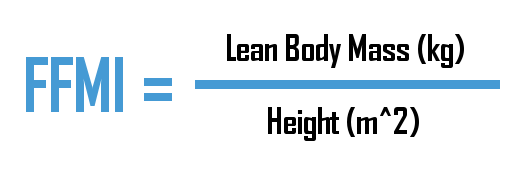
One of the unfortunate things about dieting down to these levels of body fat is that one realizes just how small one really is. Sure, I can see a lot more muscle now that it isn’t obscured by adipose, but let’s face it, 169 lbs at just a tad under 5’11” does not a large man make. However, I did some research on exactly where I stand in terms of body composition and it was quite reassuring. FFMI (Fat Free Mass Index) is a fascinating measurement that looks to improve upon the BMI by considering the person’s levels of body fat to calculate their lean body mass. Lyle McDonald does a great breakdown in his multi-post analysis here:
Non-steroid users in the original paper, who were pretty serious trainees with some having competed in bodybuilding, strength and weightlifting competitions, had an averaged FFMI of 21.8. None of the drug-free guys exceeded 25, which along with other analysis have come to conclude that an FFMI of 25 is about the best anyone not using muscle-building drugs can attain. Even then, it’s only the elite few who actually achieve it.
A sample of 209 collegiate level athletes from 10 different sports were analyzed to get their FFMI. The overall mean was 22.8 with Rugby and Football players above the mean, and Water Polo athletes below it at 20.7.
Today, as I write this my FFMI is 21.3. So essentially I’m just under the average FFMI of the trainees in the original paper, and just above the average collegiate level Water Polo player! Not too shabby for a guy who just loves to lift weights, with no athletic background to speak of.
I then did some more digging and found some really excellent news on the health front. In a study of men and women above age 65 and the impact of FFMI on all cause mortality, men with FFMI above 19.5 were associated with lower levels of all cause mortality.
So while I’d love to be a much larger version of myself, and can easily become disillusioned with what can seem like lackluster results for all my years of training, the reality is I’m in pretty good company with a slightly more muscular body than the average 20-year old collegiate Water Polo player, and my long term health will benefit as a result as well.
I hit my workout today with a renewed vigor and am feeling the fatiguing effect of it now, a few hours post. My latest split is to do 4 “full body” workouts each week, hitting all the major muscle groups. I then do 3 additional workouts to hit the smaller muscles. Yes, that’s 7 workouts in a 7-day week. I can’t think of a reason not to exercise a little every day. I have tried to do a legit full body session before, and I enjoy it, but it’s not sustainable for me. It’s just too many movements in one session and I get both tired and bored along the way. This approach seems to be just about right, with the 4 big workouts giving me the “I had a tough workout today” vibe, and the smaller ones remove the guilt and anxiety of skipping things like abs, calves, neck and the like. Here’s a sampler from today:
- BFR Stiff-legged deadlifts (4 sets) superset with BFR leg extensions (5 sets)
- Lat prayer (3 sets) superset with lateral raises (5 sets)
- Pushups (6 sets) superset with bent over rows (5 sets)
I’m doing 19 sets per week per muscle group, which is what the volume calculator from my Menno Henselman’s PT course suggests is optimal for my training status, gender, recovery factors and calorie intake. I’m trying to push each set closer to failure, but it’s a tough call as to how close I truly am. I occasionally tell myself I’m going to take some sets to legit failure to see, but the brain has a way of convincing you to stop the madness, so I never quite get there. When muscles start shaking and form starts to deteriorate, pushing the set even further starts seeming like a bad plan.
The good news is I have no injuries at the moment. Not even any nagging aches and pains. That’s a remarkable state of being compared to how I typically feel. I certainly miss pushing the iron around, and training with bands can be a real pain in the ass, but I shouldn’t complain too much. The convenience of training at home is a real bonus and I should be able to at least manage some sense of satisfaction with my results if not actual happiness.
 Joe's Blog