


The ketogenic diet has a long history, one that is tied to its use as a medically therapeutic means of controlling epilepsy. It found its way into the fat loss realm and eventually into popular culture until it hit fad status. Now it seems everyone knows someone who is “doing keto.”
I first heard of low carb dieting from some moms on my daughter’s softball team. They were doing a thing called the Atkins Diet back at a time when what you ate didn’t have special names. Curious, I asked a few questions but quickly ended the query with a nod and a sudden interest in something on the other side of the softball pavilion. A diet where fruit was forbidden? Where you couldn’t eat a sandwich? It sounded crazy to me. After all, I was a bodybuilder wannabe, reading FLEX and Muscle & Fitness magazines, and everyone knew to get those physiques we needed to eat tons of chicken and rice, sugar-filled post-workout shakes and as much oatmeal mixed with protein powder as you could stomach.
I next heard of low carb dieting when Carb Back-loading became a thing. I have to hand it to John Kiefer, the man could do some marketing. I started the back-loading protocol and the oddest thing about it for me was the low carb period before the afternoon workout. It just seemed so foreign to me to avoid morning cereal, or a bagel, or some fruit. But I did it, and eventually got over the morning lightheaded daze I was walking around in and really looked forward to the post-workout carb smash. After a few months, I had lost about 7 lbs and was pretty interested in this manipulation of the endocrine system I thought I had hacked, and along with my daughter, took the next step into the carbless realm and bought the Carb Nite Solution. I became so enamored with this way of eating–which I didn’t realize was just a cyclical ketogenic diet–that I did it for 3 years.
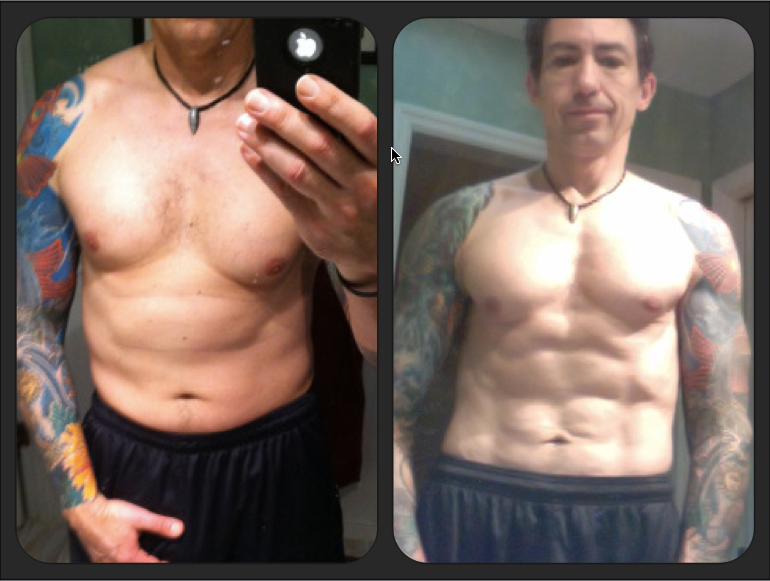
Convinced I’d found the magic trick to losing fat, I became a devoted cyclical ketogenic diet (CKD) enthusiast, until I later discovered that the weekly refeed was not only unnecessary, but it was knocking me out of ketosis and probably keeping me that way for most the following week, and the ketones were the magic key to fat loss. I stopped doing the weekly refeeds and for the first time, started doing a standard ketogenic diet. That meant keeping my net carbs–total carbohydrates less fiber–to 30 or less. The issue was, I didn’t have epilepsy.
I don’t recall the impetus for ending my unnecessary medically therapeutic diet, but one day it was over and I began eating carbohydrates again. It may have been when I started the Henselman’s PT course, but I really don’t recall. When I dieted last year to get to my leanest ever, I did not use a ketogenic diet approach. I still got lean. It’s really all about energy balance when it comes to body composition, but body composition isn’t the only thing that matters when it comes to our diet. As my hormonal improvement plan started taking shape in December of 2020, the changes I made slowly but surely pushed me back toward a lower carbohydrate approach. Higher fat intakes, especially saturated fats, are correlated with higher testosterone levels. High fiber, low fat diets are correlated with lower testosterone levels, and more importantly, higher levels of sex hormone binding globulin which binds strongly with testosterone lowering the free testosterone, which is the biologically active stuff a man needs.
To further complicate matters, the endocrine system is a complex system of hormones working together and influencing each other in a cascade of biological activity even endocrinologists don’t fully understand. To the best of my understanding, and I think I’ve read enough to have a layman’s grasp of the matter, diets high in protein, high in saturated fat and cholesterol, moderate in fiber and low in mono and poly unsaturated fats are the most testosterone friendly. An additional wrinkle is that low levels of insulin are tied to higher levels of sex hormone binding globulin, which we don’t want as men, so a standard ketogenic diet, which while high in fat, isn’t a simple solution to optimizing hormone levels. In fact, there is no simple solution. Tinkering, experimenting and coming up with a diet that optimizes each person’s individual requirements is the apex of the dietary pyramid.
If you stop and consider this for a moment, it becomes rather obvious. Take someone who has some thyroid issues, whether it be hyper or hypo. It’s not bad enough to be medicated, but it’s not optimal for their health and well being. Would that person benefit from the same dietary strategy as someone who has blood glucose issues and is borderline Type II diabetic? How about someone who is underweight and can’t seem to gain no matter what they do? How about someone with metabolic syndrome, or someone with early onset Alzheimer’s, low testosterone, low estrogen, insulin resistance…. You get the point I hope.
I got into a bit of a Facebook brawl in a group dedicated to graduates of the Henselman’s PT Course. Someone inquired about how to set up the fatty acid profile for a ketogenic diet. Violating my own rules, I decided to assist. I merely advised would be male keto dieters that oleic acid increased sex hormone binding globulin, which would lower free testosterone, and that chronically low insulin levels, a hallmark of the ketogenic diet, was also correlated with higher sex hormone binding globulin. So a male pursuing a ketogenic diet might want to get blood work done.
There was no knock on the ketogenic diet; after all I’m quite a fan. But the Keto Defender, Darth Luigi of Ketogains jumped in to allege I was saying ketogenic diets lowered testosterone. He linked a couple of articles–which I’ve read–stating the opposite and also one about cholesterol. Obviously, I didn’t say that ketogenic diets lowered testosterone. As I’ve already outlined here, it’s well established that higher fat diets–and they don’t get much higher in fat than ketogenic diets–increase testosterone. And I didn’t mention cholesterol at all. But Darth must have some kind of keto Facebook Alert set up to defend his livelihood as Ketogains prescribes a medically therapeutic approach to keto for all its adherents and can’t risk his income by allowing anyone to say anything that might cause a person to reconsider the $900 Ketogains bootcamps he offers.
I reiterated that all I said was that monounsaturated fats, specifically oleic acid, cause the liver to increase SHBG production, and that low levels of insulin do as well. Someone who wanted to do the ketogenic diet for its health outcomes, but not adversely impact their hormonal levels, could easily eat less olive oil, avocados, almonds and egg yolks and still be in ketosis. In fact, and this is ironic seeing how we were having this argument in Menno’s PT Course group, Menno himself states the goal should be to eat as many carbohydrates as possible while remaining in nutritional ketosis. That’s a smart approach, because it won’t crater insulin levels like the strict keto approach does, which again, should help with hormonal outcomes.
I eventually grew tired of the fight and tried to end it by saying that I was just trying to be helpful, which I should have known better than to try, and that anyone could eat what they want and please disregard everything I said. But Darth is not one to leave well enough alone. He took what I thought was a personal shot at me by telling me that was an inappropriate way to respond. Oh really? Well, I let him know his arrogance was exceeded only by his zealotry and reminded him that in the Henselman’s approach, we take a Bayesian mindset to fitness. We take the available data, and make the best decisions we can based on the evidence, knowing full well we may not be correct, but it’s the best information we have at the moment. If you want proof, stick to mathematics. I think I may have successfully defeated Darth at that stage, since his reply was to tell me to eat an avocado and take a chill pill. So I provided this is as my final comment and moved on:
Since you appear incapable of not having the last word, permit me to tee it up for you. I realize you have Ketogains Bootcamps to sell at $900 each, so feel free to consider these rhetorical. I understand capitalism.
Do you think the ketogenic diet is the ideal, optimal diet for everyone in all scenarios?
If not, describe the scenarios where you, Luis, would not suggest a ketogenic diet.
Lastly, what evidence would you require to admit to yourself that you might be wrong about something you currently believe to be correct?
Have fun, and take care.
I didn’t hang around for the reply, as I’m really not interested. But what prompted me to write this post today is that I received my beautiful Ketonix breath analyzer yesterday, which I thought I’d never use since I started adding carbs back into my diet after a few weeks doing strict keto for the above insulin/SHBG related reasons. But, for the hell of it, I charged it up and did my first scan last night. For the uninitiated, ketosis produces acetones which can be detected in the breath, just like alcohol in a DUI breathalyzer stop on the side of the highway. I completed my scan and surprise, surprise:
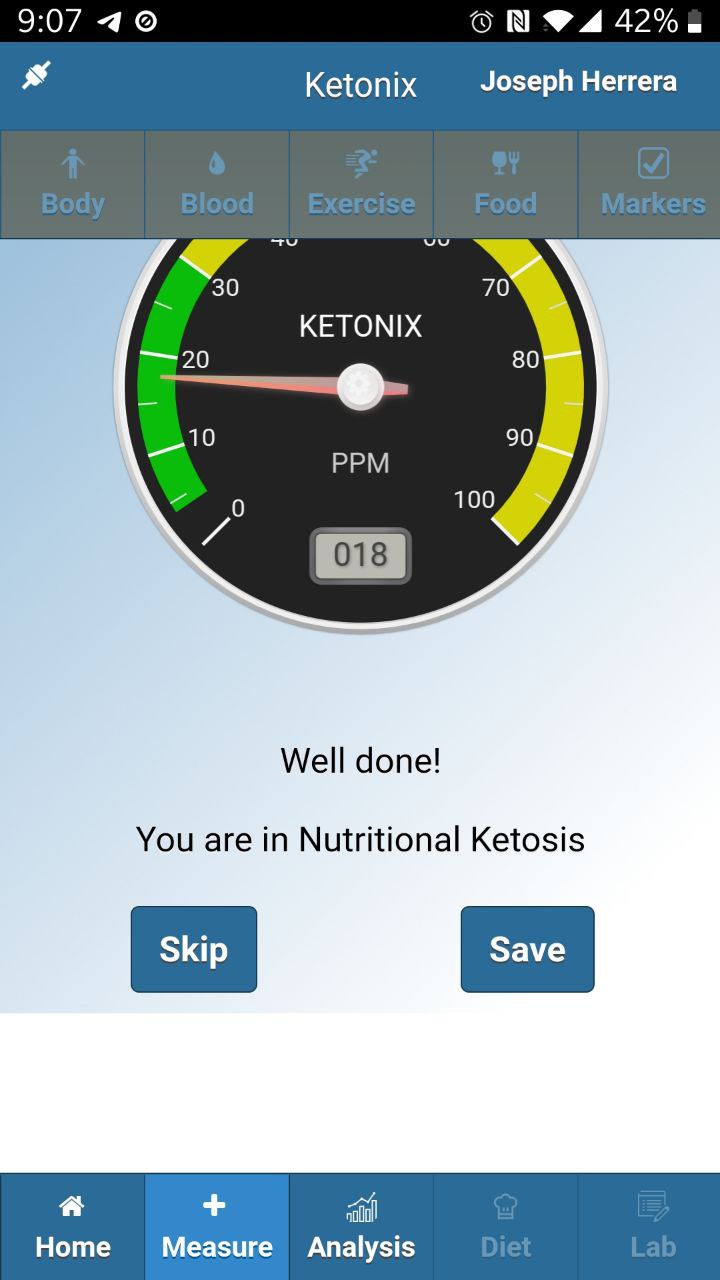
Darth Luigi was attacking a fellow keto dieter for having the nerve to say something he thought disparaged keto diets. I was surprised to be in ketosis because check out my carbohydrate intake to that point in the day:
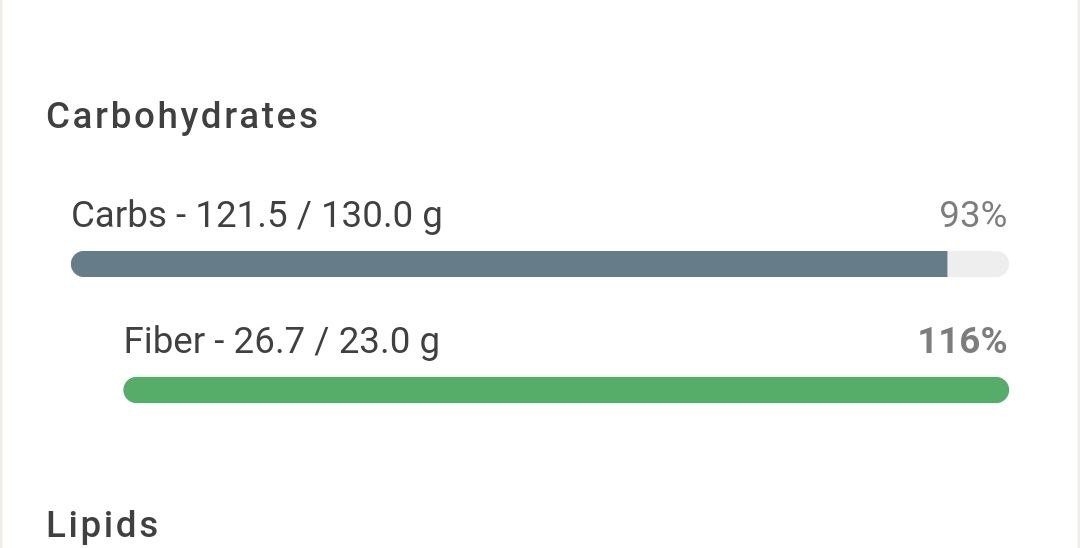
That’s right. Even eating 95 grams of net carbs–total less fiber–I was still in ketosis. Compare that to what the Ketogains macro calculator recommends I eat:
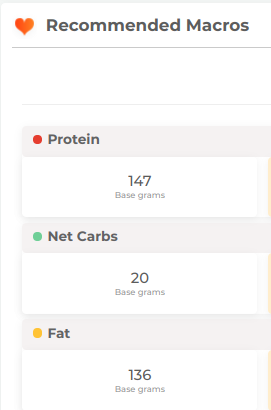
That’s right. The Ketogains protocol, which they insist their adherents follow, would put me, a non-epileptic, into a medically therapeutic ketogenic diet. This experience reminds me of someone I encountered on Twitter years ago and still follow today. I’ve written about her before, years ago, and her epic rant on keto zealotry is right on point with my own rant today. She is Amy Berger of Tuit Nutrition. She has a Master’s Degree in human nutrition and is a Certified Nutrition Specialist (I should have asked Darth Luigi for his educational credentials or lack thereof, but it was never meant to be personal) and an advocate for low carb dieting. You should check out her YouTube channel which is aptly named, Keto without the Crazy. Hats off to her, and to Menno, who although I take issue with his uninformed and ill advised stance on the Covid Pandemic early in the outbreak, was spot on when it came to how to structure a ketogenic diet.
As I wrap up this cathartic blog post, which is why I blog in the first place, I’ve become convinced that the optimal diet, if there is such a thing, is highly individualized and will likely change as the individual’s life circumstances change. It will require hypotheses, experimentation, data collection and analysis, and that process, known as the Scientific Method, has accomplished quite a bit for humankind since the Enlightenment. My current diet may be one of nutritional ketosis, but from now on, if it has to have a name, it will be The Joe Diet, because it’s built by me, for me, for my specific goals. So unless you’re me, don’t eat like me.
 Joe's Blog