

I have learned a lot over the past few months, and ultimately that’s the most rewarding aspect of any journey. A summary:
Androgen Deficiency in Aging Males
As depressing as that headline sounds, it’s a biological certainty we must contend with. The male body produces less and less testosterone over time. Evolution has decided our days of procreation are behind us, and our bodies will continue to deteriorate until we reach the clearing at the end of the path.
Total testosterone levels begin to decline, along with estrogen and DHT levels as the male body converts some testosterone into estrogen, and some into DHT through two enzymatic processes to produce a genetically determined ratio. Sex hormone binding globulin begins to increase, and this protein binds strongly with testosterone making it unavailable to act upon the body’s tissues. As a result, free testosterone also declines.
The result of this unhappy sequence of events is that the aging male begins to have less energy, less sex drive, loss of lean muscle mass, increased fat mass, and increased risk of all cause mortality.
We are not hopeless against this decline, as we can take some steps to mitigate the damage and at least slow the progress of this manhood-killing hormonal collapse. First up is diet.
A diet high in protein (1.6-1.8 grams per KG of body weight each day), high in saturated fats, moderate in carbohydrate and fiber, and low in mono and poly unsaturated fats appears to be the most testosterone friendly approach. Protein sources should be predominately animal sources, with beef seemingly correlating more strongly with higher testosterone levels. Choose fruits and vegetables as your primary carbohydrate sources as they’re chock full of micronutrients like vitamins, minerals and all sorts of phytochemicals that are protective against disease. You can have some tasty carbohydrates like breads and pasta and so forth, but keep it to a minimum. Don’t overdue the fiber intake as high fiber diets are correlated with higher levels of sex hormone binding globulin, which as I mentioned,leads to lower levels of free testosterone. Get a minimum of 20 grams per day, which should be easy if you’re eating the fruits and vegetables you should be. A higher fat diet is correlated with higher testosterone, but use caution when it comes to your fat sources. The monounsaturated fat oleic acid causes the liver to produce more sex hormone binding globulin, so even if you increase total testosterone, less of it will be freely available, so the higher total will be irrelevant. Olive oil, avocados, almonds and egg yolks; all healthy foods loaded with vitamins and minerals, are unfortunately not testosterone friendly, and let’s face it; we’re in a losing struggle against our aging bodies. So easy on the oleic.
Lift weights. As the saying goes, you don’t stop lifting weights when you get old, you get old when you stop lifting weights. The only way to prevent the loss of lean body mass is resistance training. So lift weights like you mean it.
Don’t consume alcohol. I know this flies in the face of the romanticized image of a manly man, drinking bourbon, picking up a cocktail waitress and being all male with her. Sadly, that’s not how it works. Alcohol is a poison, and from the moment it enters your body, all your body wants to do is get rid of it. I wrote a detailed analysis of it here under a pseudonym, but I didn’t touch on the hormonal impact in it. You can peruse this summary of the evidence currently available for the impact of booze on the male hormonal system. It’s not good. Here’s another on habitual drinking’s impact on sex hormone binding globulin. Also not good. Believe me, if there was good evidence that Johnnie Walker Black increased testosterone, or lowered SHBG, I’d be back to my old cocktail hours in no time.
When it comes to supplementing the diet, I’m a firm believer in vitamins and minerals and Omega-3 supplementation. Unless you’re eating a lot of fatty fish, you’re going to be eating significantly more Omega-6 fats then Omega-3, so get 3 grams per day of the Omega-3 variety in pill form to improve your 3:6 ratio. You can see my previous post on vitamin supplementation and how you can check to see if your diet is deficient (it is).
Now to the other options. We know the body uses the aromatase enzyme to convert some testosterone to estrogen to establish and maintain its preferred ratio. Blocking this enzyme from doing the conversion will take the ratio out of balance in favor of testosterone, and your body will produce more testosterone as a result, to aromatize it into estrogen again. In theory, this sounds like a good plan to increase testosterone, and it does work. There are a lot of supplements that get the job done, and I’ve done it. However, your estrogen levels will decline and even though that sounds good if you’re male, it isn’t. The lower the estrogen goes, the more symptomatic you will become.
- Decreased sex drive.
- Increased body fat.
- Increased bone loss.
- Increased risk of osteoporosis.
We’re better off leaving the estrogen alone and focusing on increasing the total testosterone and lowering the sex hormone binding globulin. We’ve got limited options, but they include a low daily dose of Viagra if you can get a prescription for it. The evidence is pretty solid that it works to increase all hormonal levels, but for now, that’s an off-label use and your doctor may not prescribe it for that purpose. Low dose daily Cialis also shows promise to increase total testosterone, but it does it by lowering estrogen, so as mentioned, that’s not a great option.
A new drug that has shown pretty impressive results is TRADAFERTIL, although I don’t think it’s even available in the United States yet. But its ingredients are. I’m about to run a 30-day trial on myself and will let you know the results.
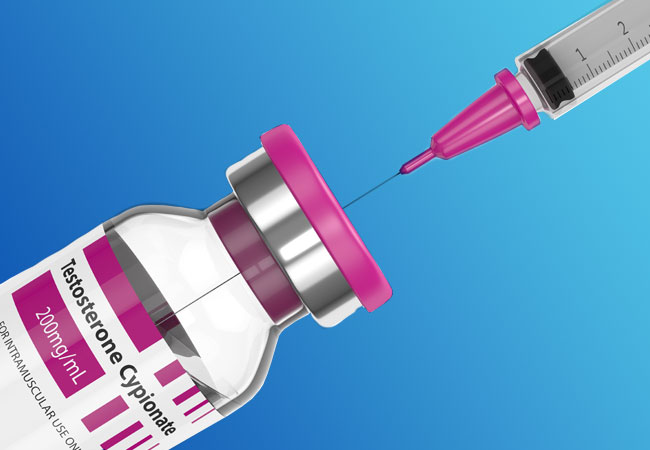
The only way to be sure your testosterone levels don’t decline to the point where you become symptomatic, is to replace the testosterone your body isn’t producing anymore. That’s where testosterone replacement therapy comes in and it’s what I’m currently getting evaluated for. Men’s clinics are ubiquitous, both brick and mortar clinics and the online version. They will evaluate your hormonal situation and establish a plan to get your levels to the optimal range. Some are more liberal than others and will prescribe higher doses of testosterone, or supply it to men who may not be clinically hypo-gonadal, but are low enough and symptomatic enough. You primary care physician will probably be more conservative–I’m sure mine is–and isn’t likely to pat you on the back and send you out the door with a 200 MG weekly dose of testosterone.
I’m not an expert on TRT by any means, but the good news is I don’t need to be. If that’s the route I choose, I’ll be under a doctor’s care and the pros will decide my TRT course and monitor my results. I can certainly aid in the discussion with the knowledge I have gained, but it’s a relief to know I’m not going to be on my own if TRT is right for me. I should know soon as I took the first proper blood test today. By proper I mean, fasted at 8:00 AM. A meal will cause a temporary decline in testosterone, and testosterone levels fluctuate throughout the day, with the early morning being the peak time. So you can get a blood draw at 2:00 PM after having a couple of meals and show pretty low levels, but that’s not going to get you a scrip for TRT. In fact, even if my levels are low–which I believe they will be–I’ll have to re-test to show them low again, and possibly even a third time.
Now you may be thinking, there are other methods I haven’t discussed. There are, but they’re illegal in the United States, and as such, would require one to not only break the law, but to be on your own to monitor your results and prevent ill effects from not knowing what you’re doing. Sure, I can buy 100 MG vials of testosterone online from Europe, pick up some syringes and do the deal myself, but the risks are real. And once you start down the path of introducing exogenous testosterone, your body’s natural production, already in decline, will decline further. When your body senses enough testosterone available in the system, it will stop its own production. So you’re either going to have stay on it, making more illegal purchases, or you’ll have to cycle off it after a little while and take some other drugs that you can’t get legally without a prescription to try to kick start your own production again. And again, you’re on your own. It’s not like you can ask your doctor for help with your illegal hormone cycle. Some good advise I heard from a knowledgeable anabolic steroid user is that for the aging male, which is who this blog post is for, the risks are greater than for a young man in his prime. A young man will bounce back more easily from a temporarily suppressed natural production of testosterone, where the older man, with lower levels to begin with and declining natural production, may never completely recover.
So there you have it Faithful Reader. My non-credentialed, non-medical summary of the little I’ve learned of the complex process of the endocrine system. As this is my personal blog, it should go without saying that this isn’t intended as advise or counsel for anyone, and no one should assume that it is. I am merely chronicling my own experiences in this thing called life, because I love to write and for no other reason. Now I sit and wait patiently for the results of my labs, and to see what my doctor will make of them.
 Joe's Blog