

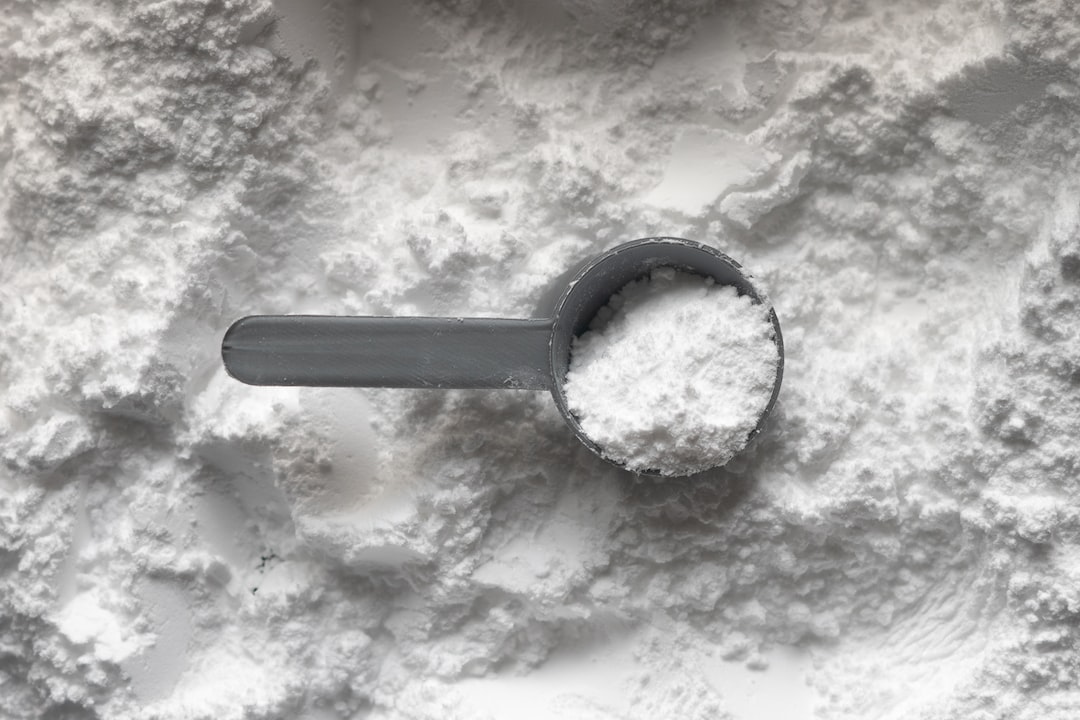
Creatine monohydrate is one of the most studied supplements in sports, health and fitness. It’s been demonstrated to work, and work quite well (for some) in increasing creatine stored in muscle cells, allowing more energy production during high intensity exercise. It has some other benefits, but the ability to run farther, lift more and generally be more awesome is what has elevated it to the top shelf of fitness supplements.
I’ve been using it for more years than I care to reflect on, on the assumption that the science was correct and I was getting these benefits whether I could notice them or not. Recently though I started to wonder, as I automatically added a scoop of creatine into the glass of water that would accompany my post-workout meal: How do I know what I think I know about creatine supplementation?
I’ve listened to podcasts with experts on the subject, I’ve read articles written by experts on the subject, I’ve seen countless questions asked and answered proffered across the social media landscape. But our brains are not our friends, and we often hear what we want to hear and tune out what we don’t. My confirmation bias has for years discarded any mention of non-response to creatine supplementation. I wanted it to work so badly, that the only information I took in was the evidence for its efficacy. Being older and hopefully wiser, I now recognize my motivated reasoning and decided to look into the literature myself to pull back the curtains on my blindside and see what there is to see.
As it turns out, there absolutely are people who got no response from creatine supplementation during multiple studies. These non-responders did not have increased creatine stores, nor did they get improved performance results. It is hypothesized that these folks started with a higher baseline of natural creatine stores, and so supplementation didn’t offer any benefit. And it wasn’t a small number of people either; some kind of anomaly. 27% of the subjects in one study had minimal increases, with another 45% having only moderate increases. 30% of the first few hundred studies on creatine supplementation showed no performance benefits. Could I be such an unfortunate soul and have I wasted my time, effort and money on wish thinking? Determined to find out, I devised an experiment. I would stop creatine supplementation cold turkey, wait weeks to ensure any possible benefit from pumping my cells full would be gone as I continued working out, and then I would start a loading phase to see the results.
While I am not drawing blood, or doing a muscle biopsy, I track my training daily and have for years. I’ll see if I get any obvious improvements in rep performance or strength, but more objectively, I’ll be looking for this: weight gain.
Creatine has long been known to increase body mass. After only a week of creatine loading, body mass is often increased by 1-2 KG, and this rapid increase is attributable to water retention. Creatine is osmolytic; this means that, similarly to glycogen, increased storage of muscle creatine draws water into the muscle cell. As such, short-term loading interventions often cause up to 1-2 liters of water retention.
After a week of loading creatine monohydrate, my weight budged not a single bit. I use the Macro Factor diet app to track calories and manage my weight goals, whether I’m trying to gain as I did recently for almost 8 months, or whether I’m trying to lean out some as I am currently. Part of the process for getting the maximum benefit from Macro Factor is weighing in each day. I weigh myself each morning under identical circumstances and log it in the app. If you’ve ever done this you know there are regular fluctuations in body weight usually from hydration status or the amount of food in your gut. So I was fully prepared for fluctuations, but Macro Factor smooths these changes to give you a trend weight, which is a closer reflection of your “true” body weight. Not only did my trend weight not increase at all from my creatine loading phase, I didn’t even have any increases in the day to day weigh-ins. I was completely weight stable the entire week.
I don’t know for sure I’m getting no response from creatine supplementation of course, but the one objective measurement I have easy access to did not produce the expected results, and my slightly more subjective training data does not indicate any significant improvements in performance that I can’t just attribute to the normal adaptations we should get from a properly constructed resistance training program. Using some basic probabilities calculations, and knowing that as many as a third of all people may be non-responders, I would surmise I may fall into that category.
This doesn’t mean I have decided to stop supplementing with it. There is some evidence suggesting other health benefits from creatine; everything from bone health to brain health, and it’s relatively inexpensive as supplements go. But if you’ve found yourself disappointed by the results you’ve gotten from trying creatine, or in my case from using it for decades, perhaps you can take solace in the fact that you are not alone. There are many of us out there commiserating with your misery.
 Joe's Blog